
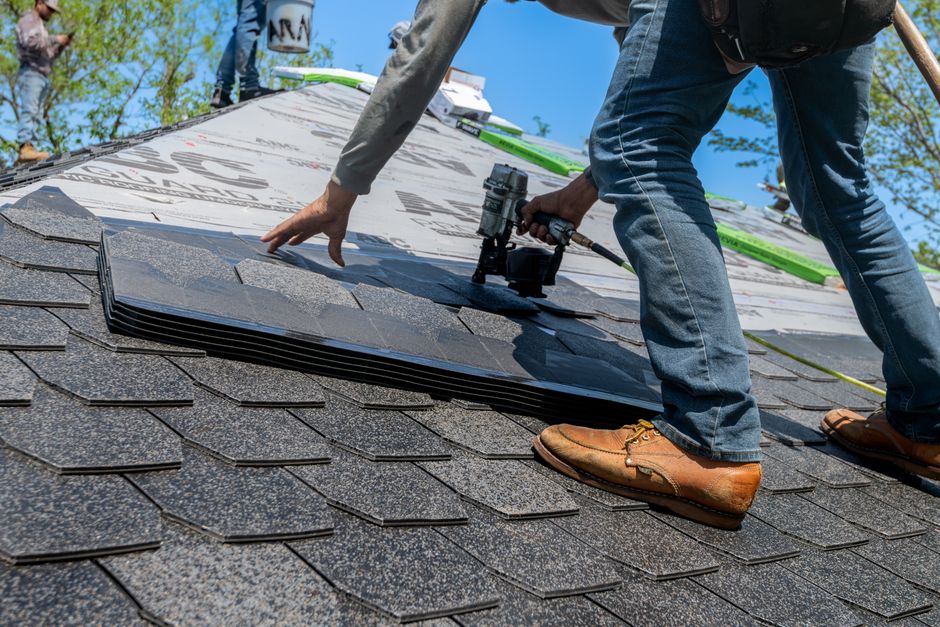
What is the difference between re-roofing and roof replacement?
Re-roofing adds a new layer of roofing material over an existing layer, while a full roof replacement removes the old roofing down to the underlying deck before installing a new system. Re-roofing is usually a limited repair approach; replacement addresses both the visible roofing and the concealed components beneath it.
The right choice depends on the roof’s age, condition, number of existing layers, ventilation, moisture exposure, and the condition of the roof deck. A roof that looks worn from the ground may still qualify for re-roofing, but widespread leaks or hidden deterioration generally make replacement the more reliable option.
How does re-roofing work?
Re-roofing places new shingles over an existing layer of shingles. The existing roof must usually be relatively flat, firmly attached, and free from widespread damage. The new material covers the old shingles, which can reduce labor and cleanup compared with a complete tear-off.
A re-roofing project may be considered when:
- The existing roof has only one layer of shingles.
- The roof deck is dry, solid, and free of significant rot.
- There are no widespread leaks or major areas of missing roofing.
- The roof has a suitable slope for the chosen roofing material.
- Flashing around penetrations, walls, and roof edges can still be properly addressed.
- Local building requirements allow another roofing layer.
Re-roofing can improve appearance and provide additional weather protection, but it does not reveal what is happening below the existing shingles. Any damaged decking, deteriorated underlayment, or improperly installed flashing may remain hidden.
What happens during a full roof replacement?
A full replacement begins with removal of the existing roofing materials. The exposed deck can then be inspected for soft spots, water damage, gaps, or structural concerns. New underlayment, flashing, ventilation components, and shingles or other roofing materials are installed as needed.
A replacement may include:
- Removal and disposal of old roofing layers.
- Inspection of the roof deck.
- Replacement of damaged decking.
- New underlayment and ice-barrier materials where required.
- New flashing around chimneys, vents, skylights, walls, and valleys.
- Repairs or improvements to roof ventilation.
- Installation of a new exterior roofing surface.
Because more of the roof system is accessible, replacement offers a better opportunity to correct underlying problems. It also typically produces more construction debris and takes longer than re-roofing.
Which option lasts longer?
A full replacement generally provides the more dependable long-term result because the old roof is removed and hidden damage can be corrected. Re-roofing can still perform well when the existing roof is in good structural condition and the installation is done correctly, but its service life may be limited by the age and condition of the roof underneath.
For example, placing a new layer over shingles that are already curled, buckled, or uneven can create an unstable base. The new layer may follow those irregularities, making the finished roof less attractive and potentially reducing its performance during wind, snow, and repeated freeze-thaw cycles.
The lifespan of either approach depends on material quality, installation, attic ventilation, moisture control, roof slope, maintenance, and exposure to weather.
How does Attica, NY weather affect the decision?
In Attica, NY, roofing systems must handle cold winters, snow, ice, spring moisture, summer heat, and repeated freezing and thawing. These conditions can expose weaknesses in shingles, flashing, roof edges, and attic ventilation.
Snow and ice can be especially revealing. A roof with inadequate insulation or ventilation may develop ice dams, which occur when heat from the attic melts snow on the upper roof and the water refreezes near colder eaves. Re-roofing alone does not automatically correct the causes of ice dams. The attic air seal, insulation levels, ventilation path, and roof-edge details may also need attention.
Heavy snow can also place stress on areas where decking has been weakened by long-term leaks. If the roof feels uneven, shows sagging, or has a history of water entry, a full inspection and possible replacement are more appropriate than simply covering the surface.
Can re-roofing be done over any existing roof?
No. Re-roofing is not suitable for every roof. Multiple existing layers, severe shingle curling, widespread moisture damage, and poor roof slope can make another layer ineffective or unacceptable under local requirements.
The condition of the roof edge also matters. Adding another layer increases the thickness of the roof. That can affect flashing, gutters, drip edges, vent openings, and the way shingles meet walls or chimneys. If those details cannot be adjusted correctly, water may find paths into the building.
Some roofing materials also have installation limitations. A new material may not be compatible with the existing surface, and certain roof designs require a complete tear-off to meet manufacturer instructions or building-code provisions.
What signs suggest that replacement is needed?
Visible wear does not always mean a complete replacement is necessary, but several warning signs point beyond a simple surface overlay:
- Repeated leaks in different parts of the building.
- Soft, spongy, or sagging areas on the roof.
- Extensive shingle curling, cracking, blistering, or missing sections.
- Dark staining or mold-like growth caused by persistent moisture.
- Damaged decking visible from the attic.
- Rusted, loose, or improperly installed flashing.
- More than one existing layer of roofing.
- A roof near or beyond its expected service life with multiple active problems.
- Water stains that return after repairs.
- Poor attic ventilation contributing to condensation or ice dams.
A single damaged area may be repairable. Several types of deterioration appearing together usually indicate that the roofing system needs a more thorough evaluation.
Is re-roofing cheaper than replacement?
Re-roofing is often less expensive at the beginning because it may require less labor, fewer disposal costs, and less time. However, the lower initial cost does not always make it the better value.
If damaged decking or flashing remains concealed, future leaks may require additional repairs. Re-roofing may also postpone, rather than eliminate, the cost of a tear-off. The age of the existing roof should be considered carefully: adding a new layer over an older roof may leave the building with a newer surface but an aging foundation beneath it.
A full replacement usually costs more upfront, but it provides an opportunity to correct moisture damage, improve ventilation, and rebuild the roof system from a sound base.
What should homeowners check before choosing?
Before deciding, homeowners should determine:
- How many layers of roofing are already present.
- Whether leaks are isolated or widespread.
- Whether the attic shows staining, daylight, damp insulation, or damaged wood.
- Whether the roof deck appears flat and structurally sound.
- Whether flashing and roof-edge components can be reused.
- Whether ventilation is adequate for the attic design.
- Whether local rules or manufacturer requirements limit re-roofing.
- Whether the remaining life of the existing roof justifies adding another layer.
A careful evaluation should consider the entire roof system, not only the shingles visible from the ground. In many cases, the central question is not whether a new layer can be installed, but whether the existing roof is sound enough to support one.
