
Roof debris can include leaves, twigs, pine needles, small branches, windblown litter, moss, and sediment left behind after storms. Removing it helps keep water moving toward the gutters and makes it easier to spot damaged shingles, flashing, or roof penetrations.
For residents of Attica, NY, seasonal debris can build up quickly. Fall leaf drop, winter weather, spring branch breakage, and summer thunderstorms may all leave material on the roof. The safest approach depends on the roof’s slope, surface, height, and the type of debris present.
What debris should be removed from a roof?
Loose organic material and storm debris should generally be removed before it becomes wet, compacted, or trapped beneath snow and ice. Leaves and pine needles can hold moisture against roofing materials, while branches may scratch shingles or puncture the roof surface.
Common debris includes:
- Leaves and pine needles
- Small twigs and branches
- Seed pods, blossoms, and other plant material
- Moss, algae, or surface sediment
- Windblown plastic or lightweight household items
- Ice-dam-related material near roof edges
- Animal nesting material
Not every object should be handled by hand. Downed electrical wires, large limbs, damaged satellite equipment, visibly loose roofing materials, and debris near a chimney or vent can create hazards beyond ordinary roof cleaning.
Is it safe to remove roof debris yourself?
It may be reasonable to remove small amounts of loose debris from a low-slope, one-story roof when the ground is dry and the roof surface is in good condition. A steep roof, wet roof, icy surface, fragile roofing material, or high roof should not be treated as a routine do-it-yourself task.
Falls are the primary concern, but other hazards matter too. Shingles can become slippery from dew, frost, moss, or fine dust. Walking on a roof can also loosen granules, crack brittle materials, or damage flashing around vents and chimneys.
Avoid roof access when:
- Snow, ice, frost, or heavy moisture is present
- Wind is strong enough to affect balance
- The roof is steep, unusually high, or difficult to reach
- The roof surface feels soft, unstable, or damaged
- A ladder cannot rest on firm, level ground
- Debris includes electrical wires or large broken limbs
- The roof has skylights, fragile panels, or areas that are difficult to see
A roof does not need to look severely damaged to be unsafe. If safe footing or ladder placement is uncertain, staying on the ground is the better choice.
What tools work best for loose debris?
For light debris, a soft roof rake or long-handled leaf rake designed for roofing can often remove material while the person remains on the ground. The tool should be used gently and pulled in a direction that does not scrape aggressively across the shingles.
A leaf blower may work on a dry, low-slope roof, but it can send debris toward neighboring areas, gutters, windows, or people below. It may also disturb loose granules or spread mold and dust. Use it only when conditions are controlled and the material is dry.
Avoid using:
- Metal rakes
- Stiff-bristled push brooms
- Pressure washers
- Garden hoses directed beneath shingles
- Sharp tools for prying debris loose
- Improvised ladders or unstable platforms
A plastic scoop or gloved hand may help with accessible material in a roof valley, but debris should not be dug out forcefully. Valleys and areas around roof penetrations are especially vulnerable to damage.
How should debris be removed without damaging shingles?
Begin by observing the roof from the ground. Look for heavy accumulation, sagging areas, missing shingles, exposed underlayment, damaged gutters, or branches resting on the roof. If any of these conditions are present, do not climb up to investigate.
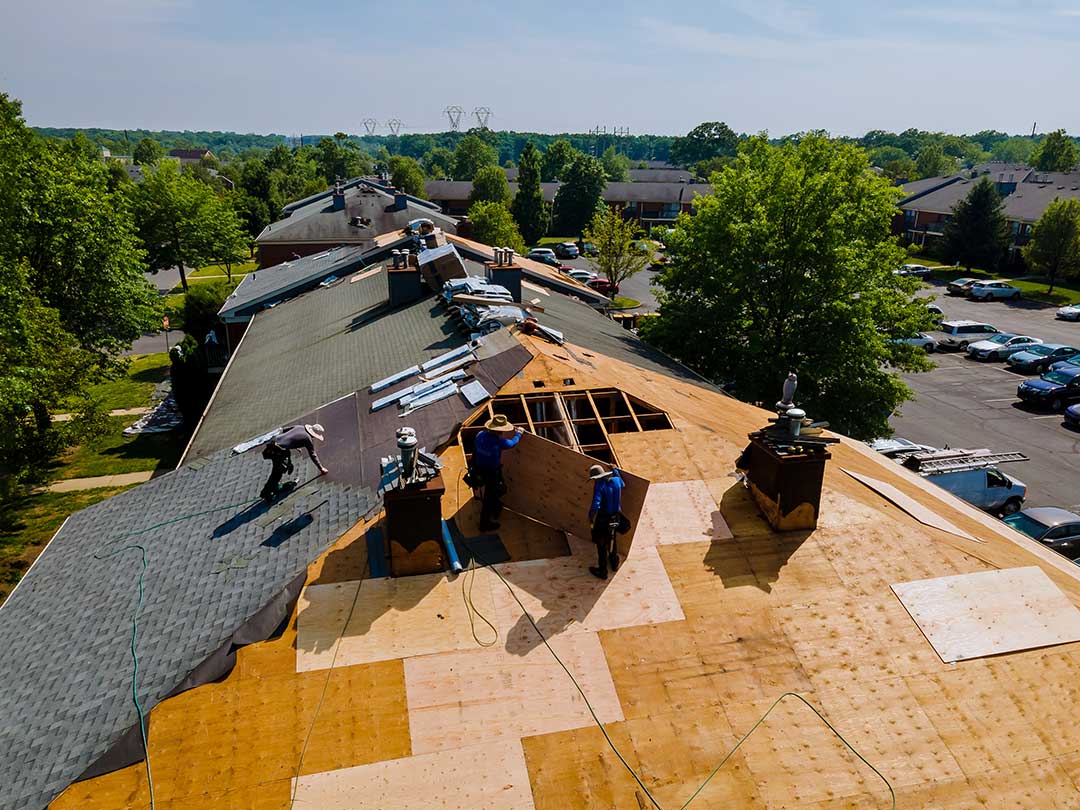
For loose material that can be reached safely, work from the highest accessible area toward the lower edge, using light pressure. Do not drag branches sideways across shingles. Lift larger pieces rather than pulling them across the surface.
Never sweep debris underneath shingle edges, flashing, ridge vents, or step flashing. Water-shedding components are designed to overlap in a particular direction. Forcing material beneath them can create openings where water may enter.
Roof granules in the gutter are another warning sign. A small amount can be expected as shingles age, but a heavy layer of granules after cleaning may indicate that the method was too aggressive or that the roof is deteriorating.
What should be done with debris in valleys and gutters?
Roof valleys concentrate water, leaves, and sediment, so they often need careful attention. Debris left in a valley can slow drainage and create wet areas that remain damp after the rest of the roof dries.
Gutters and downspouts should be checked after roof debris is removed. Material pushed off the roof may collect at the eaves and block water flow. If a downspout is clogged, water can back up against the roof edge or overflow near the foundation.
Do not stand on gutters while cleaning. They are not designed to support a person’s weight and can bend, pull away from the fascia, or lose their slope. A ground-based tool or securely positioned ladder may be suitable for some low-height gutter work, provided the setup is stable and the area below is clear.
How does local weather affect roof debris?
In Attica, seasonal changes can make a small amount of debris more troublesome. Wet autumn leaves may become heavy and compacted. Snow can cover debris, making it difficult to see whether a branch has damaged the roof. Repeated freezing and thawing may also shift material toward valleys and roof edges.
After a strong wind or thunderstorm, inspect the property from the ground before attempting cleanup. Look for:
- Large branches resting on the roof
- Shingles in the yard or near the foundation
- Bent or detached flashing
- Sagging gutters
- Damaged vent covers
- Water stains on ceilings or upper walls
- New leaks around chimneys, skylights, or roof penetrations
If water is entering the home, place a container beneath the leak if possible and protect furnishings. Avoid cutting into a ceiling unless there is an immediate safety reason, because trapped water may spread unexpectedly.
Can moss and leaves simply be swept away?
Loose leaves can often be removed gently, but moss is different. Moss may have roots or growth structures attached to the roofing surface. Pulling it away can remove shingle granules or expose underlying material.
Moss also indicates that the roof may remain damp for extended periods, often because of shade, limited airflow, or nearby vegetation. Removing the visible growth does not address those conditions. Trimming vegetation near the roof, improving airflow, and keeping gutters functional may reduce future buildup, but any treatment must be compatible with the roofing material.
Bleach, strong chemicals, and pressure washing can damage shingles, harm plants, and wash contaminated runoff into soil or drainage areas. Chemical treatment should not be improvised, especially near gardens, wells, pets, or surface water.
When does debris require specialized help?
Professional assistance is justified when debris removal involves a significant fall risk, structural damage, electrical hazards, or materials that cannot be safely handled from the ground. Examples include a tree limb through the roof, debris caught around a chimney, extensive ice buildup, a roof with visible sagging, or a multi-story structure with limited ladder access.
The need for assistance is based on the hazard, not simply on the amount of debris. A single large branch can be more dangerous than several bags of leaves. Until the area is safe, keep people and pets away from the drop zone and avoid walking beneath unstable limbs.
Regular ground-level inspections after storms and seasonal leaf fall can help identify problems before debris, moisture, and freezing conditions turn a minor issue into a roof or drainage problem.
